The future of defence: the strategic impact of 3D printing on the security of countries around the world
For over a century, global security relied on centralized production models. Traditional defence required enormous factories, multi-billion-dollar contracts, and multi-year planning cycles. Today, however, this rigid system is giving way to a technology that introduces flexibility and independence on an unprecedented scale. The effectiveness of modern security, reconnaissance, and logistics systems depends to a great extent on the materials used to manufacture defensive equipment. 3D printing enables the rapid production of key spare parts, but in demanding operational environments, standard plastics are simply not enough. Equipment must withstand extreme temperatures, harsh field conditions, and the rigorous requirements of airborne systems.
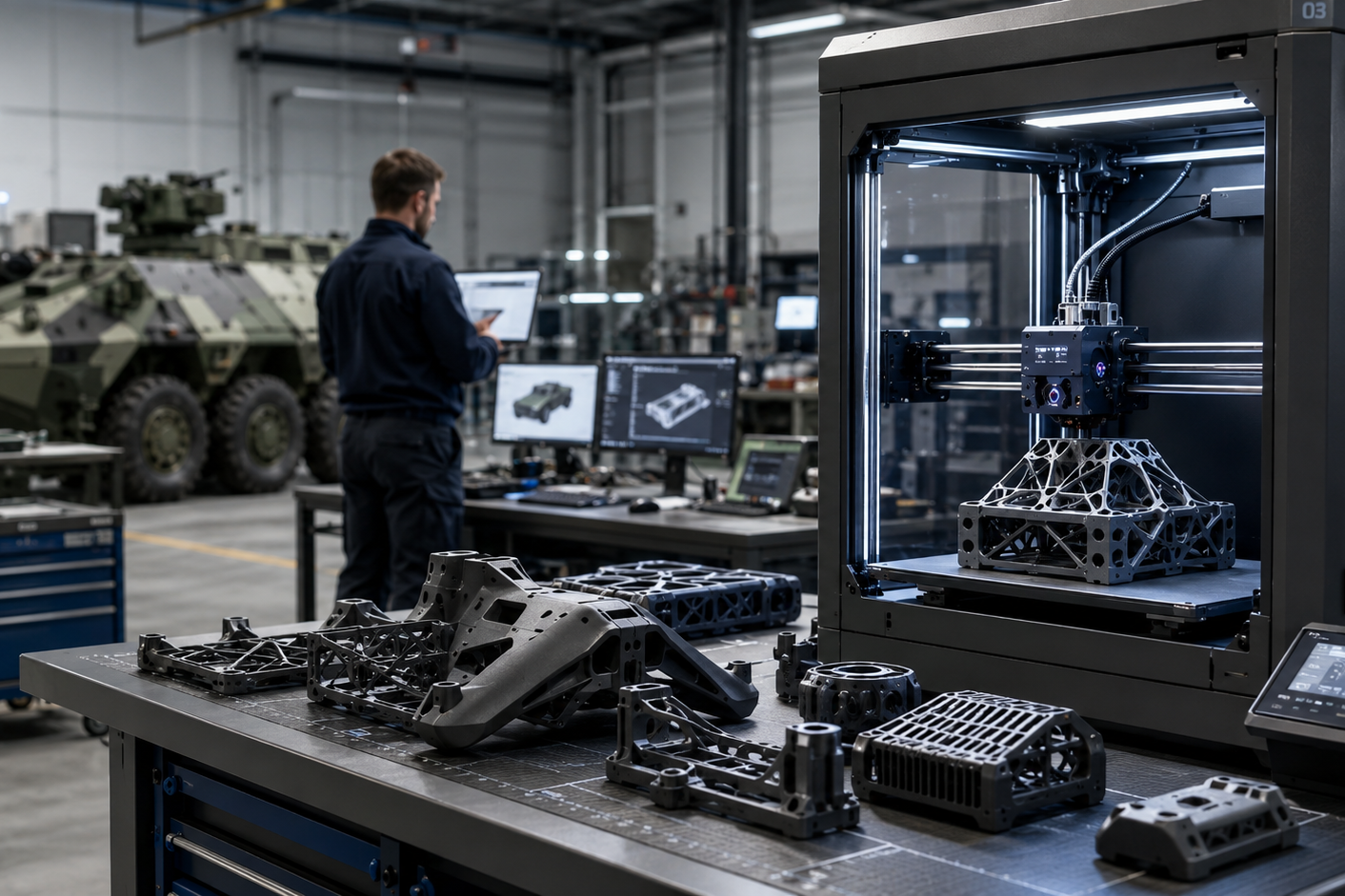
Instead of relying on slow supply chains, modern armed forces are moving toward a decentralized model that is permanently changing the way defensive advantage is built.
Logistics independence and decentralized production
One of the greatest threats to any defence system is the disruption of supply lines. The conventional model relied on dependence on individual suppliers and enormous defence conglomerates. In crisis situations and in remote areas of operation, waiting for critical replacement components could take many months, while transport remained vulnerable to blockades or attacks.
The implementation of 3D printing makes it possible to create an exceptionally flexible and dynamic support infrastructure that effectively assists military units. Instead of relying solely on traditional supply lines, this system can rapidly adapt to ongoing changes in equipment demand. The concept of a decentralized supply chain means that 3D printing farms supporting the military can safeguard operational continuity while minimizing the risk of logistics delays. As a result, essential spare parts, protective components, or communication elements can be produced by technical support teams as needed and delivered to soldiers within just a few hours.
Rapid adaptation to changing threats
Modern conflicts are characterized by extraordinary dynamics. Before the traditional defence industry could design, test, and deploy a response to a new aerial threat, the process would typically take well over a year. In the face of the large-scale use of inexpensive unmanned systems by adversaries, such a response time is unacceptable.
3D printing offers unprecedented flexibility in modifying advanced equipment and weapon systems. Engineering cycles that once took years have now been shortened to just a few months. This significantly accelerates responses to new methods of attack used by opposing forces. Based on information collected directly from the battlefield, research and development teams can efficiently introduce changes to digital designs and deploy updated interception or reconnaissance systems. This technological agility enables continuous adaptation of equipment to changing tactical and military conditions, ensuring a more effective response to evolving threats.
Cost optimization versus industrial monopoly
The impact of 3D printing on defence is not only a matter of technology, but also of economics. The traditional military industry often imposed enormous mark-ups on equipment and spare parts, benefiting from limited competition and exclusive intellectual property rights. Maintaining the operational readiness of defence systems consumed vast budgets.
Additive manufacturing dramatically reduces the cost of maintaining operational readiness. Thanks to 3D technology, low-volume production has become economically viable, making it possible to bypass costly monopolies. The ability to independently design and print parts outside the traditional supply chain allows armed forces to save millions of dollars that can be redirected to other key areas of national security.
Security and modern defensive training
Defence is largely about prevention and proper preparation for threats. 3D printing has found broad applications in the creation of modern training environments, particularly in the field of explosive ordnance disposal. Because adversary technology is developing just as rapidly, engineering units use 3D printers to faithfully replicate the latest threat-delivery mechanisms (e.g. improvised explosive devices) discovered on real battlefields. This makes it possible to provide safe and highly realistic training for explosive ordnance disposal specialists without putting their lives at risk.
In addition, the ability to locally print lightweight observation systems enables defenders to conduct continuous reconnaissance of the surrounding area. Soldiers can monitor terrain and coordinate defensive operations from concealed positions using remotely controlled printed devices, minimizing the need to physically expose personnel to danger.
Specialized ROSA3D filaments for defence applications
To replace standard plastics, military engineering turns to specialized filament blends. Below is an overview of ROSA3D engineering materials whose specific properties make them highly suitable for projects with elevated safety and durability requirements.
Extreme impact resistance and field durability: ROSA3D TPU 75D Automotive 15 Glass Fiber
Communication and logistics equipment used in the field is constantly exposed to mechanical damage. Conventional materials, such as glass fiber used in traditional antenna masts, can become brittle and crack over time under difficult weather conditions and intensive use. To maintain operational continuity, for example in radio communications, materials with reliable durability are essential.
The answer to these challenges is ROSA3D TPU 75D Automotive 15 Glass Fiber filament. It is a highly impact-resistant material reinforced with glass fiber that is extremely difficult to break. It offers exceptional resistance to high temperatures and harsh, extreme weather conditions. It also provides high chemical resistance, easily withstanding direct contact with solvents and oils.
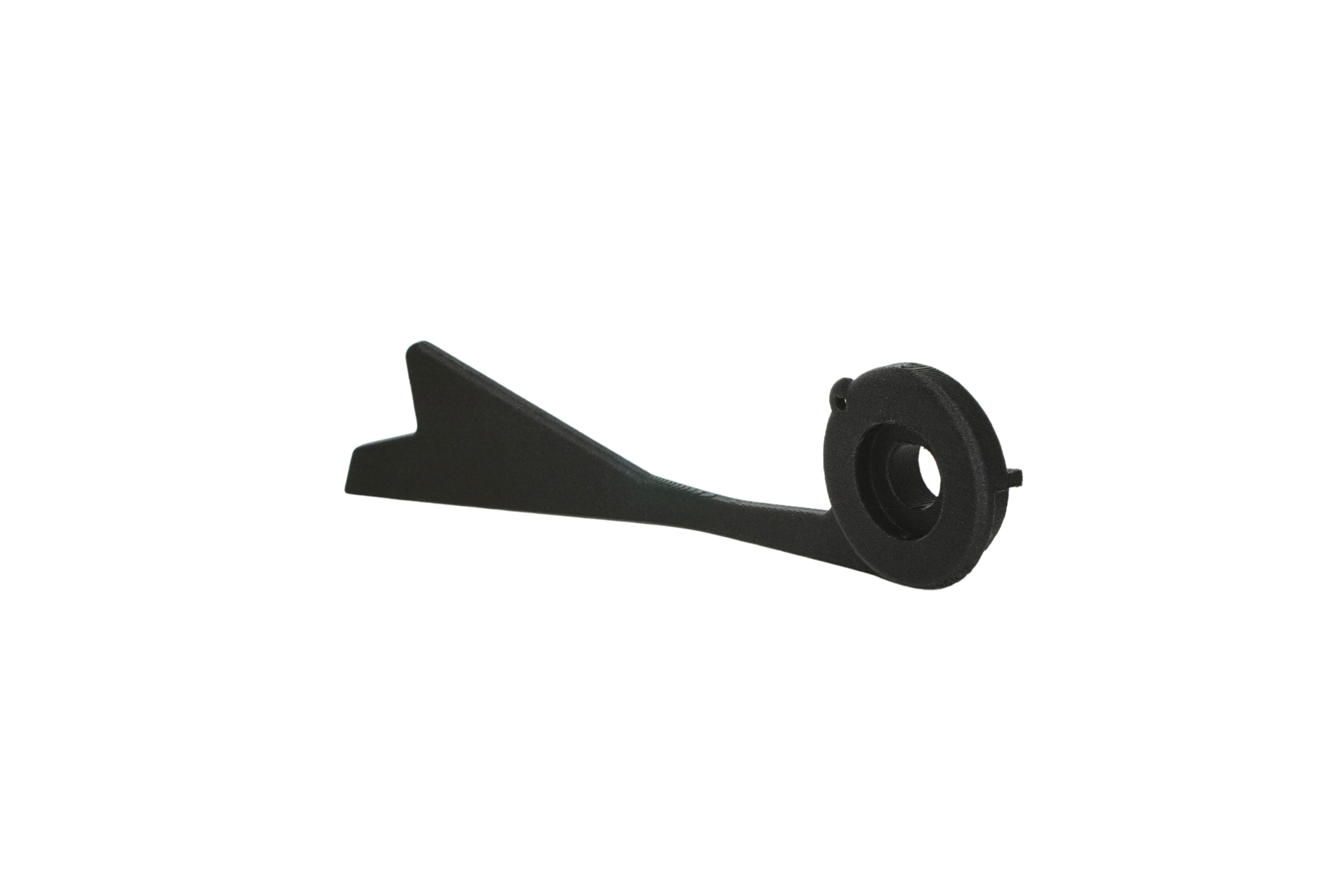
Bracket made from ROSA3D TPU 75D Automotive 15 Glass Fiber
Reliability and advanced durability for drone structures: ROSA3D ASA+5Kevlar and ROSA3D PA12+15CF
In defensive unmanned systems (reconnaissance drones), component weight and durability are critical factors. Every gram of weight saved translates directly into additional seconds of valuable flight time, allowing for longer observation of the operational area. To meet the rigorous requirements of military reconnaissance, advanced engineering composites are used in defensive applications.
ASA +5Kevlar is an innovative material that combines an ASA base — a polymer known for its excellent resistance to UV radiation and weather-related degradation — with aramid fibers (Kevlar). Components printed from this material perform exceptionally well in logistics equipment exposed for many hours to sunlight, rain, or frost. The addition of Kevlar significantly improves stiffness and abrasion resistance, making this filament an ideal choice for producing strong housings for portable radar stations and communication systems, as well as various types of brackets and mounts.
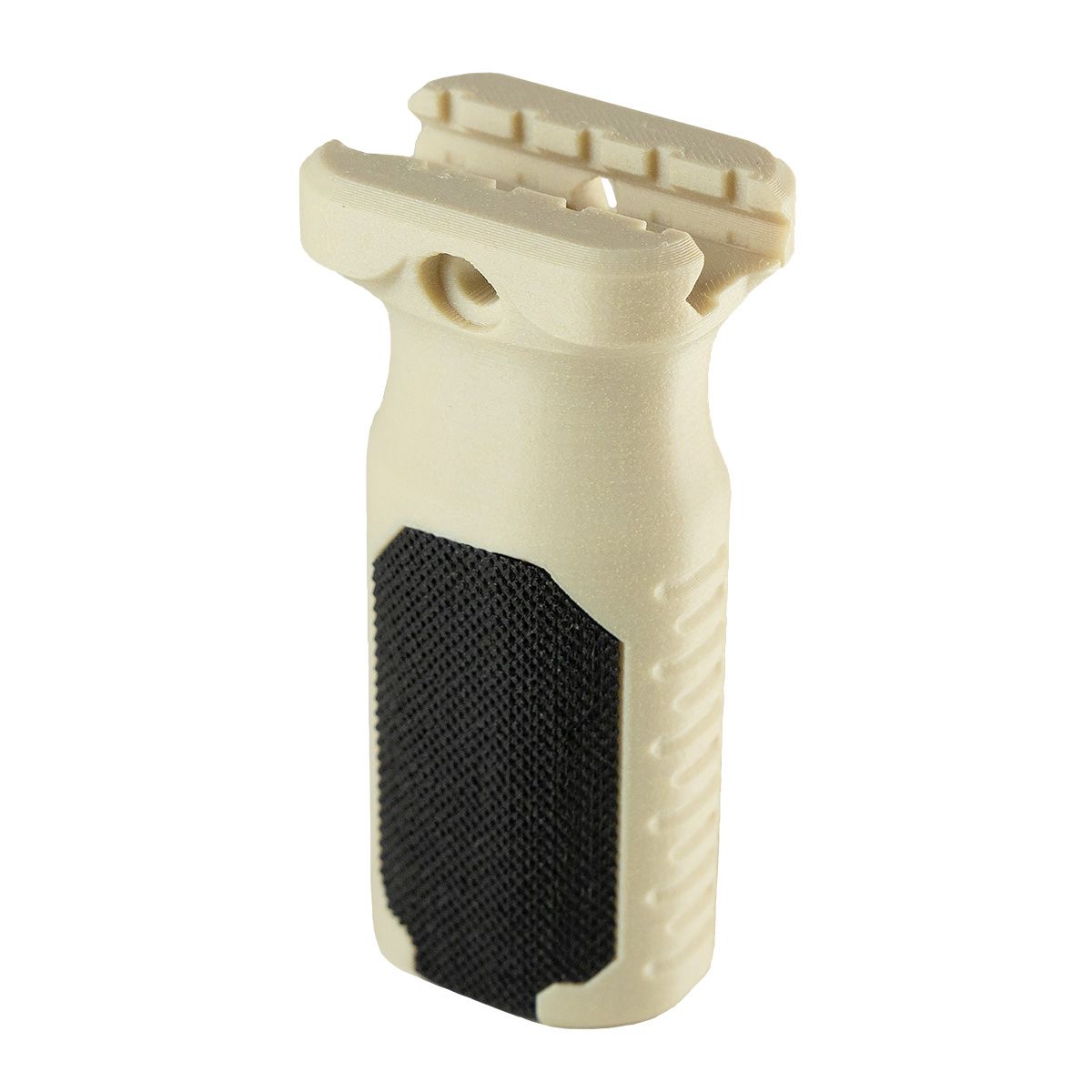
Rifle grip made from ASA+5Kevlar
In defence and aerospace engineering, reinforcing polyamides (nylon) with carbon fiber is a standard practice. PA12+15CF makes it possible to print structures that can replace conventional metal alloys. The material provides exceptional stiffness and high thermal resistance while maintaining a low weight. It is successfully used to print frames for lightweight, quiet reconnaissance quadcopters and vibration-resistant mounts for thermal imaging cameras, allowing soldiers to monitor terrain from concealed and safer positions.
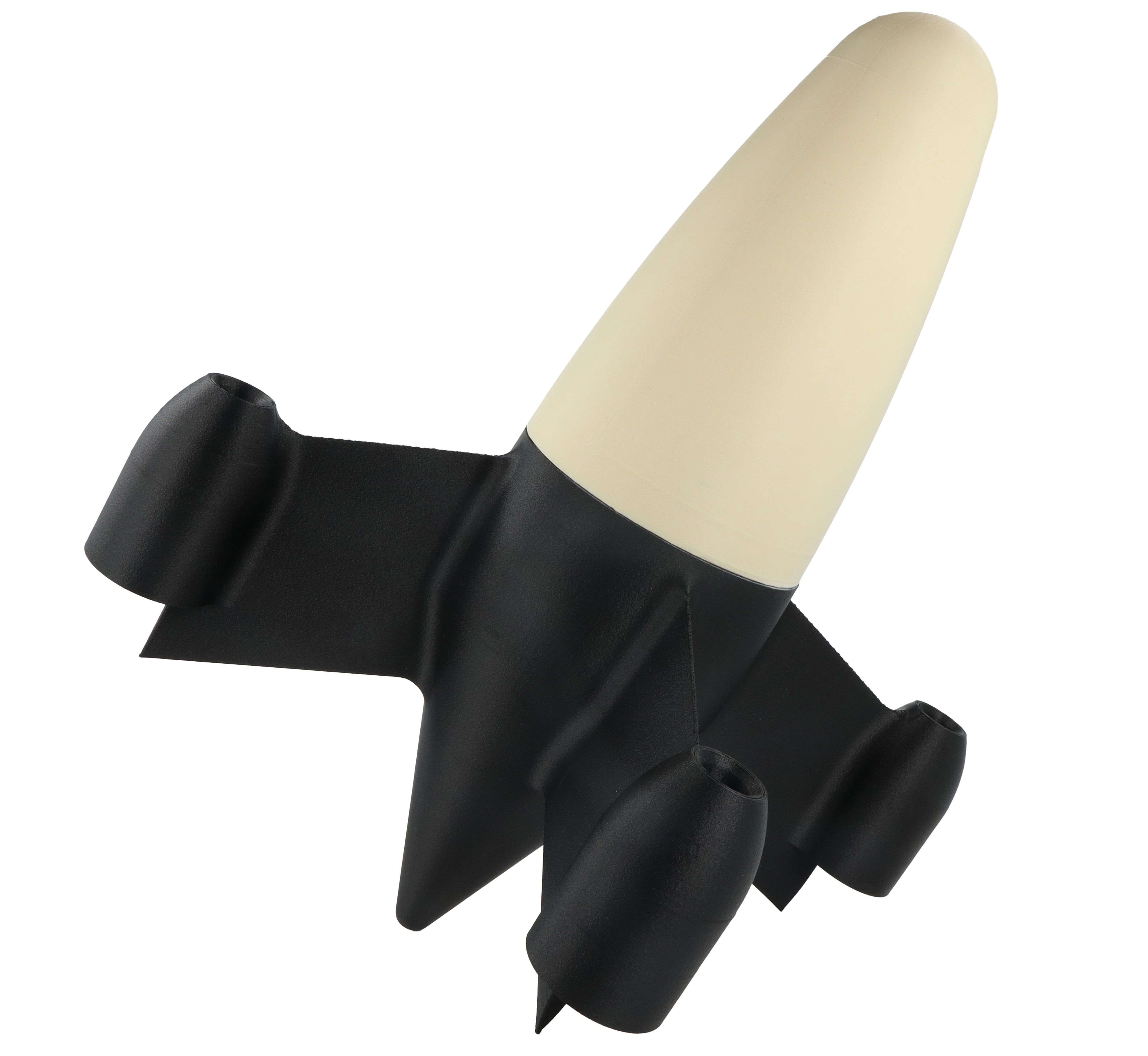
Interceptor-type drone made from ASA+5Kevlar and PA12+CF15
Durability and versatility in logistics support: PETG Standard HS
Defence is not only about advanced drones, but also about extensive training and engineering support that requires rapid construction solutions on a daily basis. PETG Standard HS is ideally suited for producing tactical equipment components, brackets, replicas, and spare parts. This advanced ROSA3D filament combines excellent aesthetics with outstanding technical properties. It has been designed to deliver exceptional durability, full user safety, and ease of 3D printing. Importantly from a logistics perspective, the material is very easy to print on virtually any machine. It does not require inconvenient drying before use, which means it can be successfully printed directly in harsh field conditions, even on standard open-frame 3D printers. Components printed from PETG Standard HS remain reliable for a very long time, supporting operational continuity.
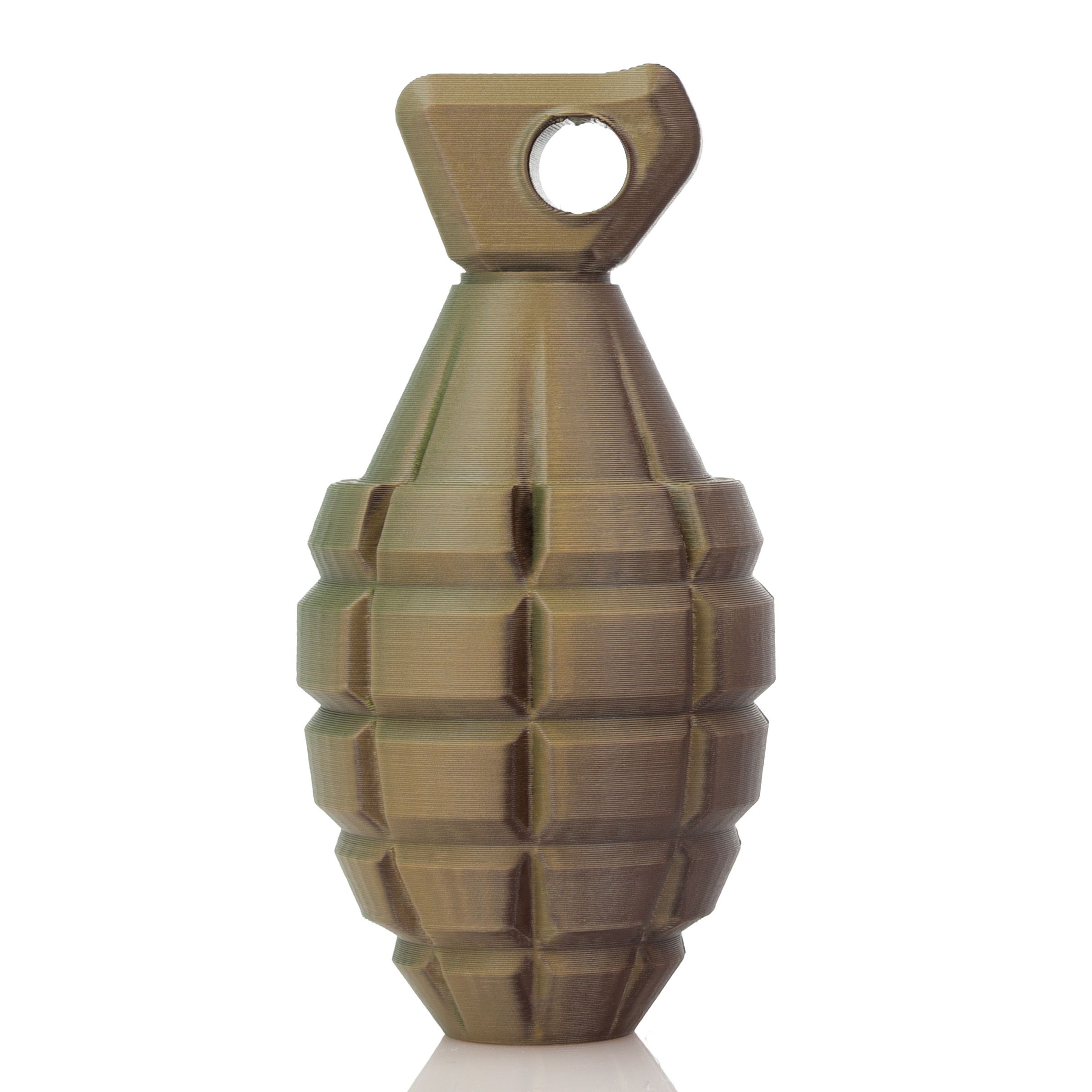
Replica made from PET-G Magic Army
Quality assurance: certified Polish production
When selecting materials for critical defence systems, supply-chain stability is just as important as the technical properties of the material itself. ROSA3D is based on domestic Polish production and draws on 47 years of experience in the plastics processing industry. The highest standards are confirmed by the implemented Integrated Management System compliant with ISO 9001:2015 and ISO 14001:2015 certifications. This gives military engineers and logistics specialists confidence in the rigorous quality control applied to every spool.
Summary
The impact of 3D printing on military operations extends far beyond equipment manufacturing alone. It represents a fundamental shift in the philosophy of securing military support infrastructure. Moving away from slow global systems that are vulnerable to disruption, modern defence focuses on agility, logistics autonomy, and rapid adaptation. 3D printing farms are becoming an invisible yet critical element of protection, helping ensure that security systems remain operational precisely when they are needed most.

ROSA PLAST SP. z o.o.
ul. Hipolitowska 102B
05-074 Hipolitów, POLAND

Email
eshop@rosa3d.pl
Our team is at your disposal on working days during the hours:
od 7:00 do 15:00
Follow us