ROSA3D TPU 75D Automotive 15 Glass Fiber – a real tough one among filaments.
Are you looking for an impact-resistant material that won’t crack and can withstand high temperatures and harsh weather conditions? Do you need prints that can survive direct contact with solvents and oils? With these challenges in mind, we’ve added a rigid TPU 75D reinforced with glass fiber to our lineup.
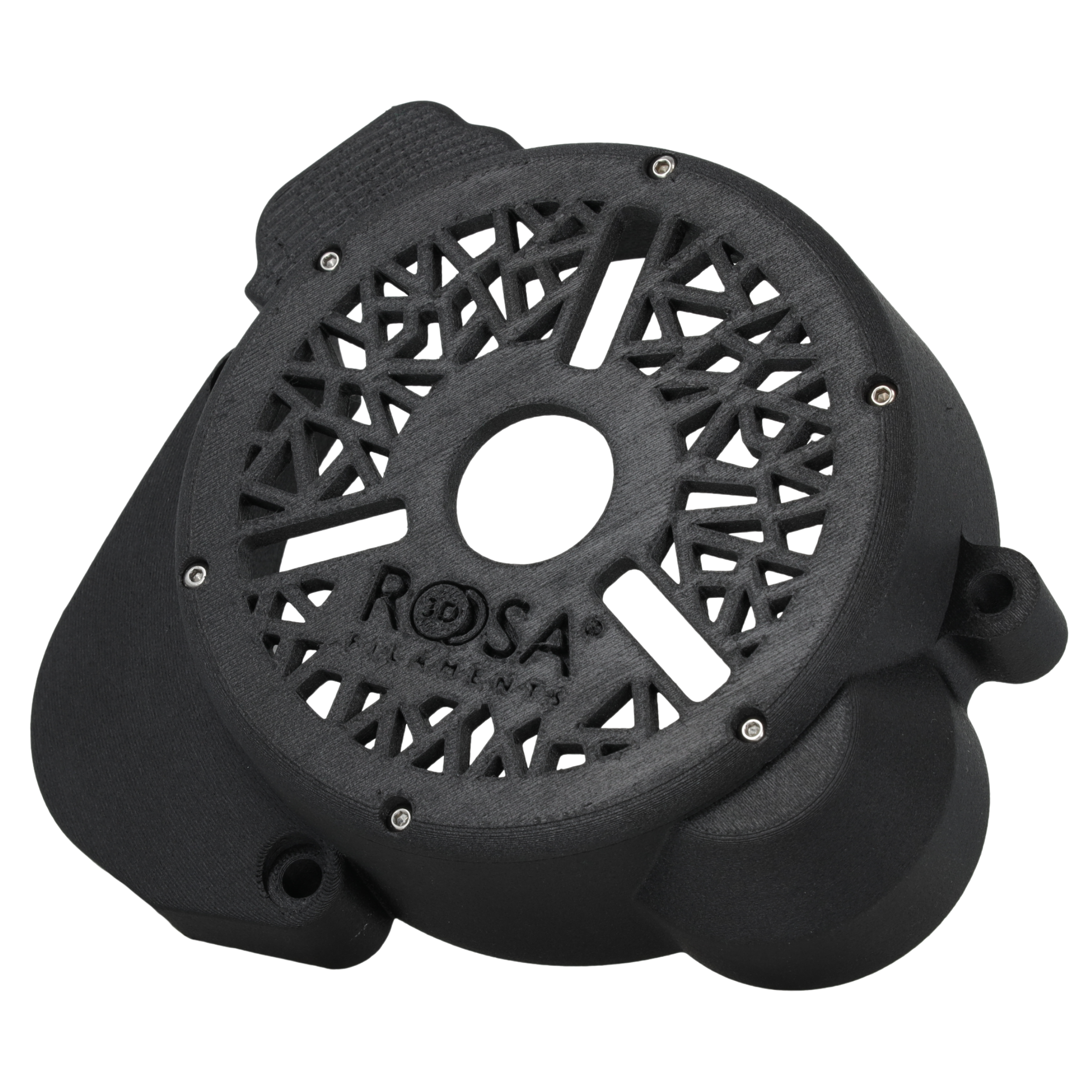
The ROSA3D TPU 75D Automotive 15 Glass Fiber filament is an advanced technical composite designed for operation in demanding environmental and mechanical conditions. This material combines high-hardness thermoplastic polyurethane (TPU) with 15% glass fiber reinforcement.
What is TPU?
TPU, or thermoplastic polyurethane, is a material valued for its high mechanical and chemical resistance. It is characterized by excellent impact resistance, meaning it can withstand shocks and dynamic loads without cracking. It also offers high resistance to chemicals such as oils, greases, fuels, and solvents, making it well suited for industrial applications. In terms of temperature performance, TPU remains stable in both low and high temperatures and can withstand very high temperatures for short periods. It does not soften abruptly, which increases its durability under friction or overheating. TPU is also resistant to external factors such as moisture and UV radiation, allowing it to be used in outdoor environments.
What is glass fiber?
Glass fiber consists of thin strands of glass with very high mechanical strength (greater than steel) while being significantly lighter. It is resistant to temperature changes, moisture, corrosion, and most chemicals. It is non-flammable and provides good thermal and electrical insulation. In 3D printing, when used as an additive in filaments, it increases the stiffness, heat resistance, and durability of printed parts.
Key features of the ROSA3D TPU 75D Automotive 15 Glass Fiber Filament
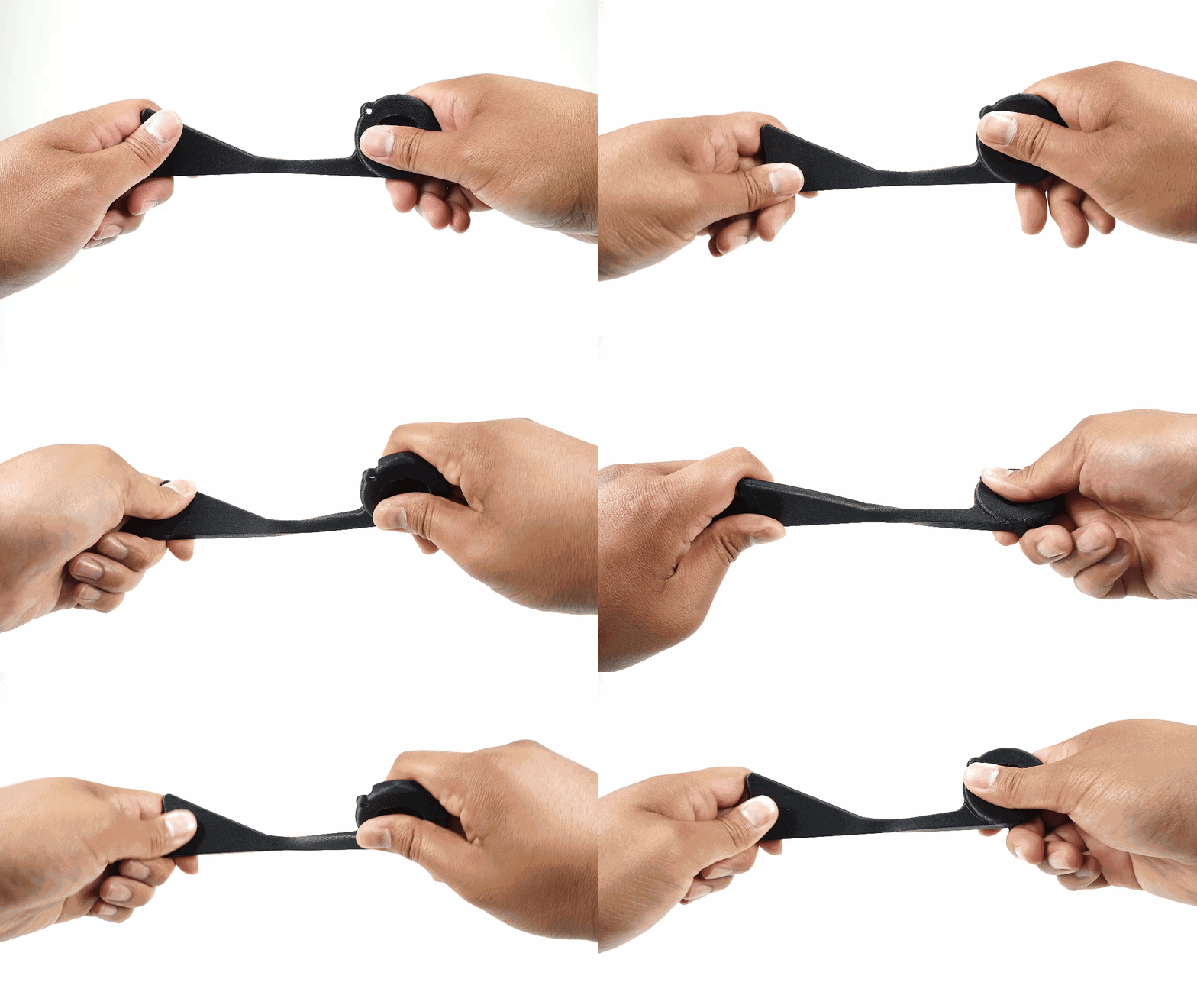
The combination of TPU and glass fiber provides exceptional properties:
• Impact and mechanical strength. The material features outstanding impact resistance, effectively absorbing dynamic loads and impacts without cracking. [Charpy impact strength = 100 kJ/m² – ISO 179/1eU (+23 °C)]
• Chemical resistance. The polymer exhibits exceptional resistance to chemicals. It does not degrade upon direct contact with oils, greases, fuels, solvents, or most industrial chemicals, while also providing complete resistance to corrosion.
• Thermal stability and insulating properties. The composite retains its properties at both low and high temperatures [HDT A = 155 °C – ISO 72-2/A/1.8 MPa]. It can withstand extremely high temperatures for short periods without sudden softening, which significantly increases its resistance to friction and localized overheating. Additionally, the material is non-flammable and acts as an effective thermal and electrical insulator.
• Resistance to extreme weather conditions. High resistance to moisture and UV radiation makes prints made from this material suitable for long-term exposure to outdoor conditions and changing weather.
Applications
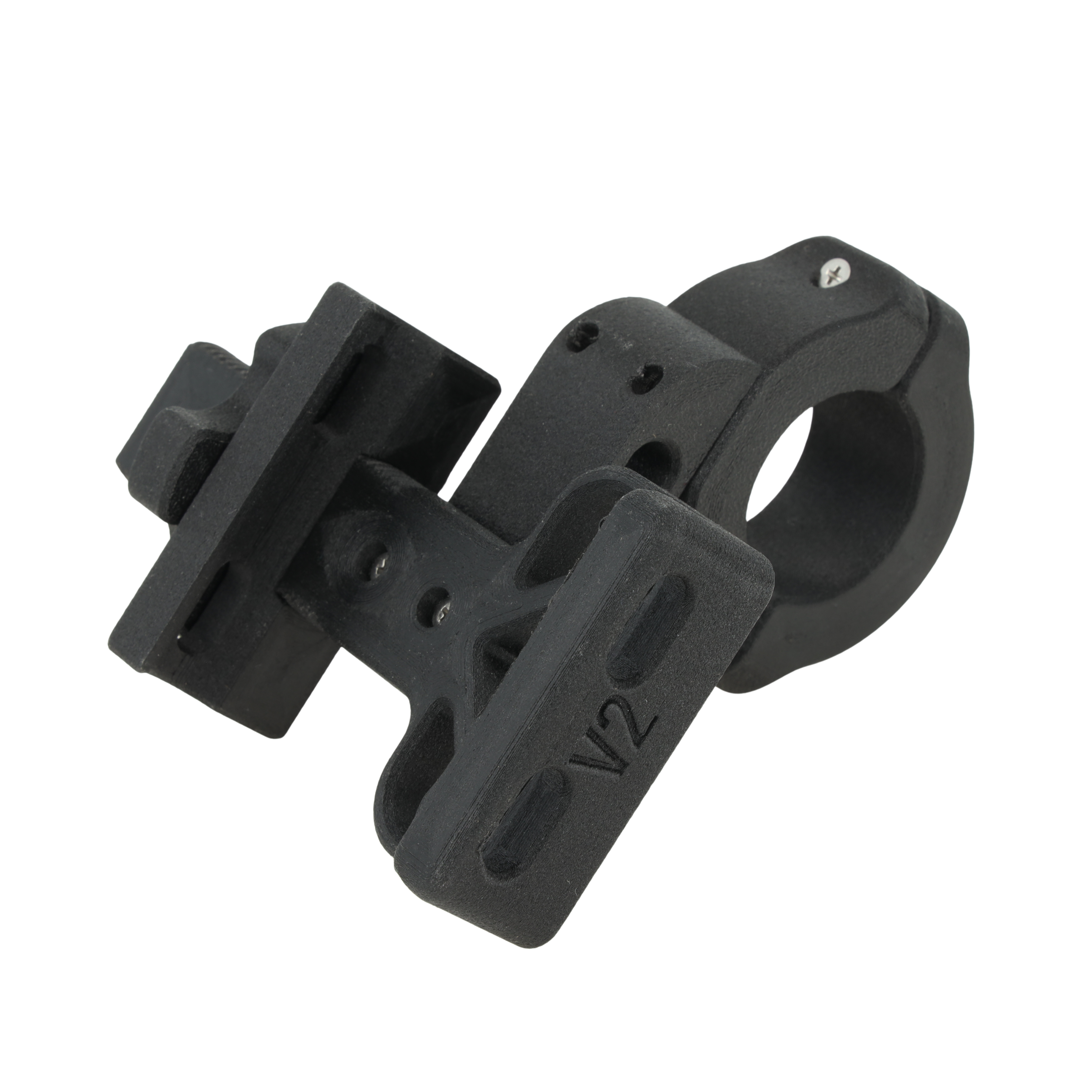
ROSA3D TPU Automotive 15 GF filament is designed for the production of end-use parts, including:
• Flexible and durable structural components designed to carry loads.
• Automotive components such as specialized brackets, bumpers, and housings resistant to oils and greases.
• Advanced flexible mounting systems.
Jak drukować
| How to print? | ||||
| Nozzle temperature [°C] | 230 – 255 | |||
|---|---|---|---|---|
| Bed temperature [°C] | 60 – 90 | |||
| Print speed [mm/s] | 5 – 40 | |||
| Cooling [%] | 0 – 30 | |||
| Enclosed chamber | Required | |||
| Recommended nozzle | Steel | |||
| Drying settings [°C /h] | 70/4 | |||
The filament does not require an industrial-grade printer. However, before printing, please keep the following in mind:
1. Steel nozzle. Due to the highly abrasive nature of glass fiber, make sure your printer is equipped with a steel nozzle (rather than a brass one).
2. Close the chamber and use an air filter. Due to the presence of microscopic glass fiber particles released during the extrusion process, it is recommended to equip the 3D printer with an additional filter or an advanced air filtration system.
3. The filament is not compatible with AMS-type material systems. The abrasive nature of the glass fiber contained in the material leads to accelerated degradation and wear of the guiding components within the system.

ROSA PLAST SP. z o.o.
ul. Hipolitowska 102B
05-074 Hipolitów, POLAND

Email
eshop@rosa3d.pl
Our team is at your disposal on working days during the hours:
od 7:00 do 15:00
Follow us